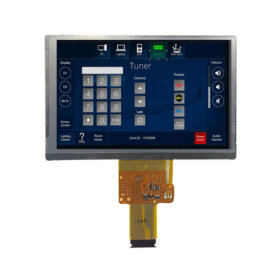
Why OEMs Need a Long-Term Replacement Strategy for Discontinued Ortustech Displays For industrial equipment manufacturers, display components are not simply interchangeable parts. A display module is often deeply integrated into the product structure, including mechanical housing, electrical interface, firmware settings, optical design, and user experience. When a display model reaches End-of-Life (EOL) status, many OEM companies face a difficult decision: continue purchasing limited remaining stock or redesign the entire product around a new display. The challenge becomes even greater for applications using Ortustech transflective TFT LCD panels, which were widely selected for their excellent sunlight readability, low power consumption, and stable outdoor performance. A successful replacement strategy requires more than finding a panel with the same diagonal size. OEM customers need a replacement solution that maintains product reliability while reducing redesign costs and development time. Common Challenges After Ortustech Display Discontinuation 1. Mechanical Compatibility Issues Industrial devices are usually designed around a specific LCD module structure. Even a small difference in: Module outline dimensions Active […]
2026-07-17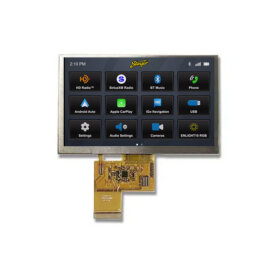
Industrial display supply chains are under increasing pressure as more legacy TFT-LCD modules reach End-of-Life (EOL). Ortustech panels, widely used in sunlight-readable industrial applications, are among the most affected product lines. For OEM manufacturers, the challenge is not only finding a replacement display, but ensuring long-term supply stability without redesigning the entire system architecture. At YOURITECH, we support industrial customers with engineering-driven replacement solutions for discontinued sunlight-readable LCD modules, helping reduce redesign risk and maintain production continuity. Why Ortustech EOL Creates Supply Chain Risk Industrial products often remain in the market for 8 to 15 years, far longer than the lifecycle of most display components. This mismatch creates significant risk when a panel enters EOL. Typical impacts include increased BOM costs, unexpected redesign requirements, firmware adjustments, mechanical revalidation, and long-term spare part shortages. For outdoor and portable applications, the situation is even more critical because display readability is directly tied to product usability. Where Ortustech Displays Are Commonly Used Ortustech LCDs are widely adopted in […]
2026-07-03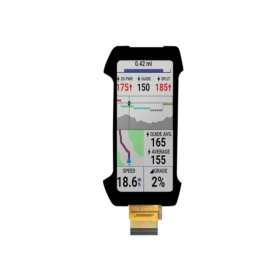
Cycling technology has rapidly evolved in recent years, and one of the most important innovations is the cycling computer bike display. From professional road racers to mountain bikers and e-bike riders, modern cycling computers provide real-time data, navigation, performance tracking, and safety alerts through high-performance display modules. But what exactly is a cycling computer bike display, and why is choosing the right display technology so important?In this guide, we’ll explore its key features, major benefits, and real-world applications. What Is a Cycling Computer Bike Display? A cycling computer bike display is a compact screen integrated into a bicycle computer system that shows essential riding information such as: Speed Distance GPS navigation Heart rate Cadence Power output Elevation Battery level These displays act as the rider’s control center, delivering accurate data in real time, even under strong sunlight, rain, vibration, and changing temperatures. As cycling becomes smarter, displays are becoming more advanced, featuring touchscreen interfaces, wireless connectivity, and ultra-low power consumption. Key Features of Modern Cycling […]
2026-06-18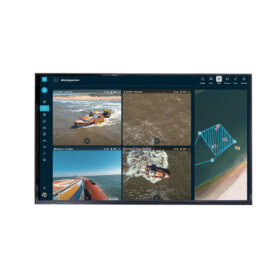
As drone technology continues to expand across industries such as aerial photography, industrial inspection, agriculture, surveying, public safety, and defense, display visibility has become one of the most critical factors for successful drone operation.Unlike indoor devices, drone displays are used in highly dynamic outdoor environments where sunlight, weather conditions, vibration, and fast-moving visuals create unique challenges. At YOURITECH, we specialize in sunlight-readable LCD displays, custom touch integration, embedded driver boards, and industrial-grade display solutions for drones and UAV ground control systems. Our high-brightness display technology supports brightness levels from 400 nits up to 20,000 nits, designed for harsh outdoor applications. Why Do Drones Need High-Brightness Displays? Drone operators often work under direct sunlight, which makes ordinary displays difficult to read. This is especially important for: FPV (First Person View) drone systems UAV remote controllers Ground control stations Aerial mapping systems Tactical drone operations Industrial inspection drones A sunlight-readable drone display ensures clear visibility of: Live video feeds Flight telemetry Battery status GPS data Camera controls Mission planning […]
2026-06-12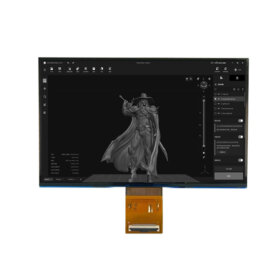
As 3D printing technology continues to reshape industries such as industrial manufacturing, medical prototyping, aerospace engineering, and smart automation, machine interface requirements are becoming increasingly sophisticated. One of the most essential components in a modern 3D printer is the display system. A high-performance 3D printer display is more than just a visual interface—it is the operational center for monitoring, controlling, and optimizing the entire printing process. At YOURITECH, we understand that choosing the right display solution can directly impact machine efficiency, print precision, and user experience. With years of expertise in custom LCD displays, touch panels, embedded solutions, and industrial display integration, we help global manufacturers build smarter and more reliable 3D printing systems. In this guide, we’ll explain how to choose the right high-performance display for your 3D printing machine. Why Is Display Selection Important for 3D Printers? A display acts as the bridge between the operator and the machine. In 3D printing applications, the display is responsible for: Real-time print status monitoring Temperature and […]
2026-06-12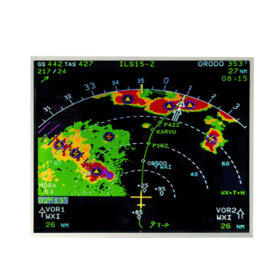
An Aerospace Display is a high-reliability visual interface system specifically designed for aviation and space environments, where performance, safety, and durability are mission-critical. It is widely used in cockpit avionics, flight control systems, mission computers, and UAV ground control stations. Compared with commercial or industrial displays, aerospace displays must operate reliably under extreme conditions such as wide temperature variations, intense vibration, high-altitude pressure changes, and strong electromagnetic interference. Therefore, they require exceptional optical performance, rugged mechanical design, and stringent system-level safety compliance. As modern avionics continue to evolve toward digitalization and intelligence, aerospace displays are advancing toward higher brightness, lighter weight, lower power consumption, and greater integration, becoming a core human-machine interface component in next-generation aviation systems. 1. Define the Application First Different aerospace uses require very different display priorities: Commercial aircraft cockpit (PFD/MFD)→ high brightness, redundancy, long life Military avionics / mission systems→ rugged, NVIS compatibility, wide temp UAV / drone ground control→ sunlight readable, low latency Cabin / passenger displays→ cost-efficient, high resolution, […]
2026-06-05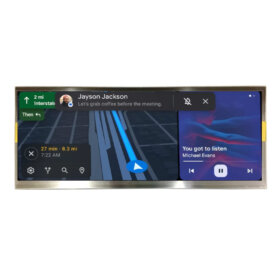
More 12.3 Inch Automotive Display For Reference HSD123KPW1-A30 (1920×720, LVDS, IPS, 850nits, -30~85°C, 308.1×130mm) TM123XDKP11 (1920×720, LVDS, IPS, 800nits, -40~85°C, 309.8×128.1mm) ET123BA10-T (1920×720, LVDS, IPS, 1200nits, -30~80°C, 310×128mm) LS123M5LZ01 (1920×686, LVDS, IPS, 1000nits, -30~85°C, 301.3×120.5mm) HSD123KPW1-A30 supports display 1920(RGB)×720 with aspect ratio of 8:3 (W:H), whose pixels are arranged in RGB Vertical Stripe. It features active area of 292.032(W)×109.512(H) mm, outline size of 308.1(W)×130(H)×15.6(D) mm, viewing area size of 294.8(W)×112.1(H) mm, with surface treament of Antiglare, net weight of 520g (Typ.). As a IPS Pro, Normally Black, Transmissive LCM product, HSD123KPW1-A30 can provides 850 cd/m² display brightness 1000:1 transimissive contrast ratio, 85/85/85/85 (Typ.)(CR≥10) (L/R/U/D) viewing angle, best view direction on Symmetry , and response time of 17/18 (Typ.)(Tr/Td) ms. Gray scale or the brightness of the sub-pixel is determined with a 8-bit gray scale signal for each dot, thus presenting a palette of 16.7M colors, also with performance of color gamut 71% (NTSC). This product adopted 11S4P WLED as it's backlight systerm which was placed as Edge […]
2026-05-12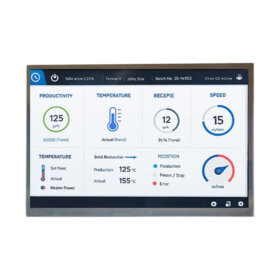
More 10.1 Inch Automotive Display For Reference DJ101IA-07A (1280×720, LVDS, IPS, 750nits, -30~85°C, 238.6×148mm) AV101HDM-N11 (1280×720, LVDS, IPS, 700nits, -40~85°C, 233.9×141.4mm) C101UAN01.0 (1920×1200, LVDS, IPS, 1400nits, -30~85°C, 236.96×163mm) COG-VLSZT115-01 (1920×1080 , LVDS, IPS, 1100nits, -40~85°C, 237.69×142.7mm) M101GWT9 R3 (1024×600, LVDS, TN, 640nits, -30~85°C, 244×143mm) ET101WS06-TT (1024×600, TTL, IPS, 700nits, -20~70°C, 252×150mm) ET101WX10-T (1280×800, LVDS, IPS, 900nits, -30~80°C, 229.1×148.9mm) TX26D207VM0AAA (1280×800, LVDS, IPS, 1000nits, -40~85°C, 231×153.5mm) ET101WX15-TT (800×1280, MIPI, IPS, 750nits, -20~70°C, 166.5×249.7mm) DJ101IA-07A supports display 1280(RGB)×720 (WXGA) with aspect ratio of 16:9 (W:H), whose pixels are arranged in RGB Vertical Stripe.It features active area of 223.68(W)×125.82(H) mm, outline size of 238.6(W)×148(H)×9.7(D) mm, viewing area size of 226.68(W)×128.82(H) mm, with surface treament of Antiglare, net weight of 330g (Max.). As a AAS, Normally Black, Transmissive LCM product, DJ101IA-07A can provides 750 cd/m² display brightness 1000:1 transimissive contrast ratio, 85/85/85/85 (Typ.)(CR≥10) (L/R/U/D) viewing angle, best view direction on Symmetry , and response time of 10/15 (Typ.)(Tr/Td) ms. Gray scale or the brightness of the sub-pixel is determined with a 6-bit / 8-bit gray […]
2026-04-22
More 9 Inch Automotive Display For Reference TM090JDKP01 (1280×720, LVDS, IPS, 1100nits, -40~85°C, 211.5×128.08mm) M090AWP4 R0 (800×480, TTL, TN, 750nits, -30~85°C, 210.82×126.96mm) HSD090JFW1-A11 (1024×600, LVDS, IPS, 500nits, -30~85°C, 211.1×126.5mm) ET090BA01-GA (1920×384, LVDS, IPS, 3000nits, -30~85°C, 235.8×55.8mm) TM090JDKP01 is a 9.0 inch diagonal a-Si TFT-LCD display screen product, with an incorporated WLED lighting system, without backlight driver, without touch screen. TM090JDKP01 supports display 1280(RGB)×720 (WXGA) with aspect ratio of 16:9 (W:H), whose pixels are arranged in RGB Vertical Stripe. It features active area of 198.72(W)×111.78(H) mm, outline size of 211.5(W)×128.08(H)×10.2(D) mm, viewing area size of 201.72(W)×114.78(H) mm, net weight of 272±27g. As a SFT, Normally Black, Transmissive LCM product, TM090JDKP01 can provides 1100 cd/m² display brightness 1000:1 transimissive contrast ratio, 88/88/88/88 (Typ.)(CR≥10) (L/R/U/D) viewing angle, best view direction on Symmetry , and response time of 35 (Typ.)(Tr+Td) ms. Gray scale or the brightness of the sub-pixel is determined with a 8-bit gray scale signal for each dot, thus presenting a palette of 16.7M colors, also with […]
2026-04-22
8 Inch Automotive Display Overview AT080TN64 (800×480, TTL, IPS, 500nits, -30~85°C, 192.8×116.9mm) DJ080IA-10A (1024×600, LVDS, IPS, 750nits, -30~85°C, 192.8×116.9mm) TX20D207VM0AAA (1280×768, LVDS, IPS, 1200nits, -40~85°C, 189.5×119.4mm) TM080JDKP96 (1280×720, LVDS, IPS, 800nits, -30~85°C, 192.8×116.9mm) ET080WU11-TT (1920×1200, LVDS, IPS, 1000nits, -20~70°C, 181.7×119.8mm) ET080WU01-RCTT (1920×1200, LVDS, IPS, 2000nits, -30~85°C, 179.96×119.92mm) AT080TN64 is a 8.0 inch diagonal a-Si TFT-LCD display panel product, with an integral WLED backlight system, without backlight driver, without touch screen. It features an operating temperature range of -30 ~ 85°C , a storage temperature range of -30 ~ 85°C , and the maximal vibration level of 1.5G (14.7 m/s²). It's general features are summarized in the following: Wide Temperature, WLED Backlight, U/D,L/R Reverse, 6/8 bit, Matte. Product Link: https://www.youritech.com/products/8-inch-tft-lcd-display-800x480-parallel-rgb-high-brightness-500nits-wide-temperature-lcd-display-for-automotive.html DJ080IA-10A is a 8.0 inch diagonal a-Si TFT-LCD display screen product, with an incorporated WLED lighting system, without backlight driver, without touch screen. DJ080IA-10A supports display 1024(RGB)×600 (WSVGA) with aspect ratio of 16:9 (W:H), whose pixels are arranged in RGB Vertical Stripe. It features active area of 176.64(W)×99.36(H) mm, […]
2026-04-22
More 7 Inch Automotive Display For Reference TX18D200VM0EAA (1920×1080, LVDS, IPS, 1200nits, -40~85°C, 169×104mm) ET070FH01-H (1920×1080, MIPI, IPS, 4500nits, -20~70°C, 164.19×97.87mm) COM70H7M24ULC (800×480, LVDS, VA, 790nits, -30~85°C, 169.8×109.7mm) TX18D211VM0BXA (800×480, LVDS, IPS, 1000nits, -30~80°C, 170×113.3mm) COM70H7M40ULC (800×480, LVDS, VA, 400nits, -30~85°C, 169.8×109.7mm) COM70H7M40ULN (800×480, LVDS, VA, 1200nits, -30~85°C, 169.8×109.7mm) TX18D210VM0BAA (800×480, TTL, IPS, 800nits, -40~85°C, 167.7×109.5mm) TM070RDHG34-00 (800×480, TTL, TN, 1000nits, -30~85°C, 164.9×100mm) P0700WVN1MA00 (800×480, TTL, TN, 1000nits, -30~85°C, 164.9×100mm) ET070WS01-T (1024×600, TTL, IPS, 800nits, -20~70°C, 164.9×100mm) ET070WS10-TC (1024×600, LVDS, IPS, 1000nits, -30~85°C, 179.34×109.89mm) ET070WX03-T (800×1280, MIPI, IPS, 400nits, -20~70°C, 99.65×160.85mm) DJ070IA-20B (1280×768, LVDS, IPS, 930nits, -35~80°C, 163.35×107.12mm) TX18D200VM0EAA supports display 1920(RGB)×1080 (FHD) with aspect ratio of 16:9 (W:H), whose pixels are arranged in RGB Vertical Stripe,it's pixel density is 313 PPI. As for mechanical detail, it features active area of 155.52(W)×87.48(H) mm, outline size of 169(W)×104(H)×10.3(D) mm, viewing area size of 158.5(W)×90.5(H) mm, net weight of 180g (Typ.). As a IPS Pro, Normally Black, Transmissive LCM product, TX18D200VM0EAA can provides 1200 cd/m² display brightness 1300:1 […]
2026-04-16
More 6.2 Inch Automotive Display For Reference HSD062IDW1-A02 (800×480, TTL, IPS, 400nits, -20~70°C, 155.2×88.2mm) ET062NH02-T (360×960, TTL, IPS, 800nits, -20~70°C, 58.1×154.9mm) ET062NH02-TT (360×960, MIPI, IPS, 500nits, -20~70°C, 68×165mm) ET062WS01-T (1024×600, TTL, IPS, 750nits, -30~80°C, 144.27×88.1mm) HSD062IDW1-A02 is a 6.2 inch diagonal a-Si TFT-LCD display screen product, with an incorporated WLED lighting system, without backlight driver, without touch screen.HSD062IDW1-A02 supports display 800(RGB)×480 (WVGA) with aspect ratio of 16:9 (W:H), whose pixels are arranged in RGB Vertical Stripe. It features active area of 137.52(W)×77.232(H) mm, outline size of 155.2(W)×88.2(H)×5.3(D) mm, viewing area size of 140.7(W)×80.4(H) mm, with surface treament of Antiglare, Hard coating (3H), net weight of 120g (Typ.). As a TN, Normally White, Transmissive LCM product, HSD062IDW1-A02 can provides 400 cd/m² display brightness 600:1 transimissive contrast ratio, 75/75/70/70 (Typ.)(CR≥10) (L/R/U/D) viewing angle, best view direction on 6 o'clock , and response time of 2/6 (Typ.)(Tr/Td) ms. Gray scale or the brightness of the sub-pixel is determined with a 6-bit / 6-bit + FRC gray scale signal […]
2026-04-16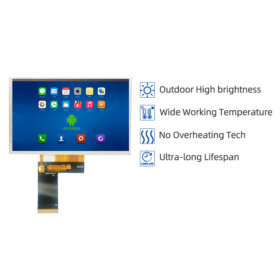
More 5 Inch Automotive Display For Reference M050SWN1 R2 (480×234, TTL, IPS, 585nits, -30~85°C, 124×74.5mm) ET050HD04-T (720×1280, MIPI, IPS, 400nits, -30~85°C, 65.4×119.3mm) COG-VLITT1654-08 (640×480, LVDS, IPS, 600nits, -30~85°C, 119.7×92.8mm) COM50H5N15ULC (800×480, LVDS, IPS, 1200nits, -30~85°C, 124×80.82mm) ET050WV06-T (800×480, TTL, IPS, 1500nits, -30~85°C, 120.7×75.8mm) A0500WVF2MAAA (800×480, TTL, IPS, 1000nits, -30~85°C, 121.3×78.8mm) ET050SQ01-KD (600×600, MIPI, IPS, 1000nits, -20~70°C, 95.08×99.5mm) M050SWN1 R2 supports display 480(RGB)×234 with aspect ratio of 16:9 (W:H), whose pixels are arranged in RGB Vertical Stripe. As for mechanical detail, it features active area of 110.88(W)×62.478(H) mm, outline size of 124(W)×74.5(H)×7.3(D) mm, viewing area size of 112.6(W)×64.2(H) mm, with surface treament of Antiglare, Hard coating (2H), net weight of 91.5g (Typ.). As a TN, Normally White, Transmissive LCM product, M050SWN1 R2 can provides 585 cd/m² display brightness 500:1 transimissive contrast ratio, 70/70/50/60 (Typ.)(CR≥10) (L/R/U/D) viewing angle, best view direction on 6 o'clock , and response time of 15 (Typ.)(Tr+Td) ms. Gray scale or the brightness of the sub-pixel is determined with a 8-bit gray scale signal […]
2026-04-14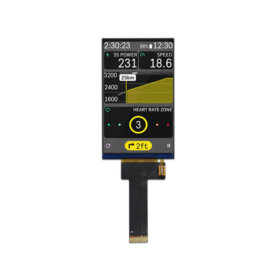
3.5 Inch Automotive Display Overview ET035WV03-T (480×800, MIPI, IPS, 350nits, -20~70°C, 51.32×86.61mm) ET035HV10-T (320×480, TTL, IPS, 500nits, -20~70°C, 54.48×84.71mm) ET035CR01-T (800×640, TTL, IPS, 1500nits, -20~70°C, 97.6×83.79mm) AV035LQM-N10-28P0 (320×240, TTL, IPS, 750nits, -30~85°C, 84.4×70mm) ET035WV03-T is a 3.5-inch diagonal TFT-LCD display product with a transmissive display mode. ET035WV03-T supports a resolution of 480×800 with an aspect ratio of 3:5 (W:H), delivering a compact portrait-oriented display performance, and utilizes a MIPI interface for signal transmission. It features an active area of 45.36(W)×75.6(H) mm and an outline dimension of 51.32(W)×86.61(H) mm. The display provides a typical brightness of 350 cd/m², suitable for automotive applications, and adopts IPS technology for wide viewing angles of 85/85/85/85 (L/R/U/D). ET035WV03-T operates within a temperature range of -20 to 70°C and can be stored within -30 to 80°C. This model does not include a touch function. Product Link: https://www.youritech.com/products/3-5-inch-tft-lcd-display-480x800-mipi-ips-lcd-display-for-automotive.html ET035HV10-T is a 3.5-inch TFT LCD module featuring a resolution of 320x240 pixels and utilizing the ST7272A controller with an IPS RGB 24-BIT panel interface. This module […]
2026-04-14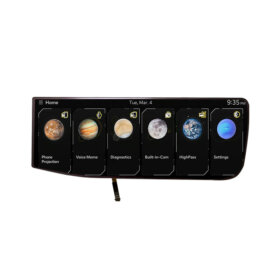
Choosing an automotive display isn’t just about size or resolution—it’s about safety, durability, readability, and integration. Start with the application (most important) Different automotive displays have completely different priorities: Instrument cluster (speed, RPM) → reliability, anti-glare, no distraction Center infotainment (navigation/media) → touch, UI smoothness Rear-view / camera display → low latency, high brightness HUD (head-up display) → projection clarity, contrast Define your use case first—otherwise specs don’t mean much Choose display technology Each technology has trade-offs: LCD / TFT (most common) Cost-effective, stable Long lifespan OLED Best contrast, deep blacks Flexible/curved design Burn-in risk for static UI Micro-LED (emerging) Very bright, long life Expensive In automotive today: IPS LCD dominates, OLED is premium Brightness & sunlight readability (critical) Cars operate in extreme lighting: Minimum: 700 nits Recommended: 1000+ nits Premium outdoor: 1500–2500 nits Also look for: Anti-glare / matte surface High contrast ratio Without this, the screen becomes unreadable in sunlight Resolution & clarity Small screens: ≥ 720p 10"+ displays: 1080p […]
2026-04-14

